

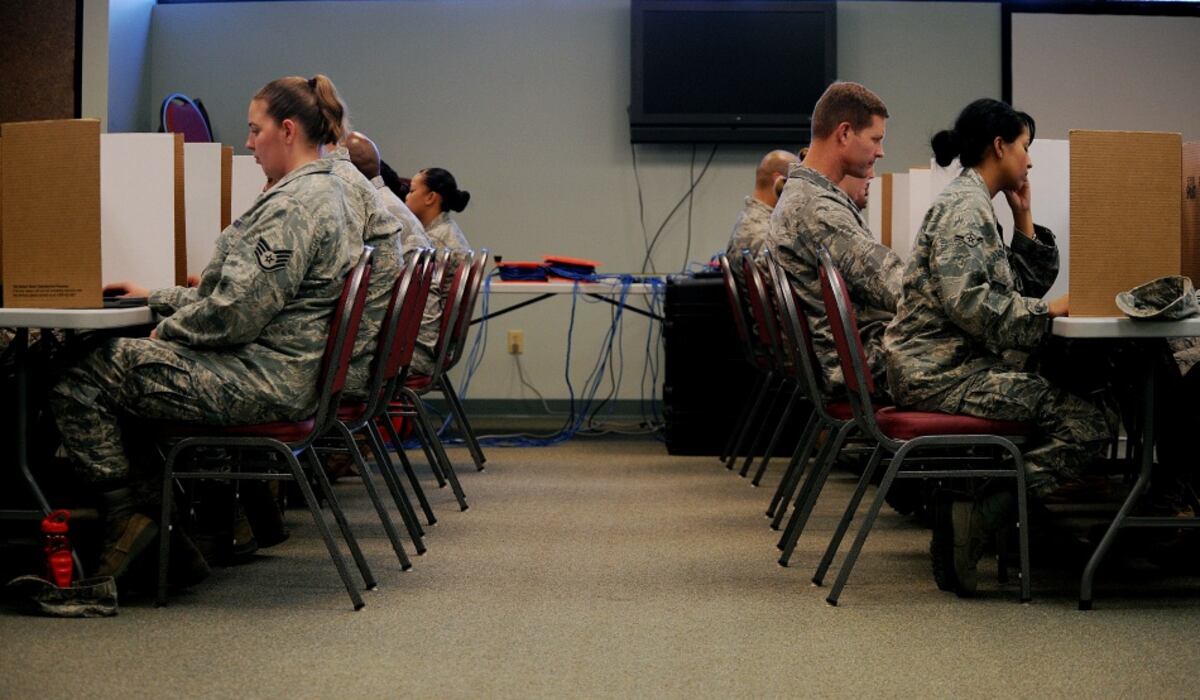
The Defense Department is updating its Cognitive Monitoring Program to include a next-generation capability to meet increased operational demands and reflect matured science.
The department will transition from the current Automated Neuropsychological Assessment Metrics, or ANAM, to an “improved capability” through a phased implementation effective immediately, according to a June 9 Pentagon memorandum.
A Pentagon official told Military Times that the effort will replace legacy tools with a next-generation, enterprise-wide capability that can detect cognitive changes early.
The new capability will provide timely, actionable data that can allow commanders to make informed operational decisions, while empowering medical providers to analyze cognitive trends for rapid clinical follow up and the department to sustain the overall readiness of the U.S. military, the official said.
“While ANAM provided an early foundation for cognitive baseline collection, the operational requirements, and technological landscape have advanced significantly,” the memo reads.
“The Department’s sustained research investments, combined with emerging clinical insights and the evolution of neurocognitive and neurobiological assessment capabilities, now support a transition from ANAM to a more modern, scalable, and operationally aligned solution,” the memo continues.
The memo first circulated on the unofficial Air Force Facebook page Air Force amn/nco/snco last week. A Pentagon official confirmed its authenticity to Military Times on Wednesday.
The rise of ANAM
ANAM is a computerized test that takes around 20 to 30 minutes with a combination of reaction and memorization activities to evaluate a service member’s neurocognitive baseline and can evaluate for traumatic brain injuries, or TBIs.
The tool was first developed in 1984, and it was mandated by Congress in 2008 for all Defense Department personnel as a pre-deployment baseline testing and post-injury assessment. At the time, the number of TBIs in the military grew substantially following deployments to the Iraq and Afghanistan conflicts.
TBI is the disruption of brain function or structure caused by an external force, like a blow to the head or shockwave from a blast, that can cause brain bleeds or swelling. Symptoms can range from dizziness and trouble sleeping to memory loss or seizures.
While most cases are mild and allow service members affected to return to duty rather quickly, the more severe cases can last years or be permanent.
More than 500,000 service members sustained a TBI from 2000 to 2025, according to government data, from day-to-day activities, military deployment or training. The majority of TBI cases suffered by service members are classified as mild, or concussion, and they can return to full duty within 10 to 14 days of sustaining the injury.
Service officials have considered TBI to be the “signature injury” of modern warfare as it was seen widely in post-9/11 conflicts due to an increase in the use of explosive devices.
More recently, in the Iran war, nearly 500 service members have been injured, with the majority of injuries being TBIs.
A new approach
The June memo, signed by Under Secretary of War for Personnel and Readiness Anthony Tata, says that the DoD is granting a one-year exception to the previous policy to allow for the phased implementation to replace ANAM as the Pentagon’s cognitive monitoring tool.
When indicated, the new tool will incrementally replace ANAM for cognitive baselining, periodic monitoring, pre-deployment screening, clinical evaluations and post-deployment assessment, per the memo.
“The Department’s commitment to brain health is unwavering and enduring,” Tata wrote in the memo. “This modernization ensures that our cognitive monitoring enterprise reflects evolving science, operational needs, and our responsibility to protect those who defend our great nation.”
During the phased implementation, ANAM will continue to be used to meet the department’s cognitive monitoring requirements until the new capability is tested across the military.
Firstly, the rollout will prioritize deployed service members, followed by those preparing to deploy, the Pentagon official said, and will reach all remaining service members eventually. The memo also states that high-risk civilian personnel will be included in the early implementation.
TBI interventions
The change continues the broader efforts across the DoD to strengthen early identification and management of brain-health impacts for the total force. Services have been fielding new capabilities to assess TBI on the battlefield.
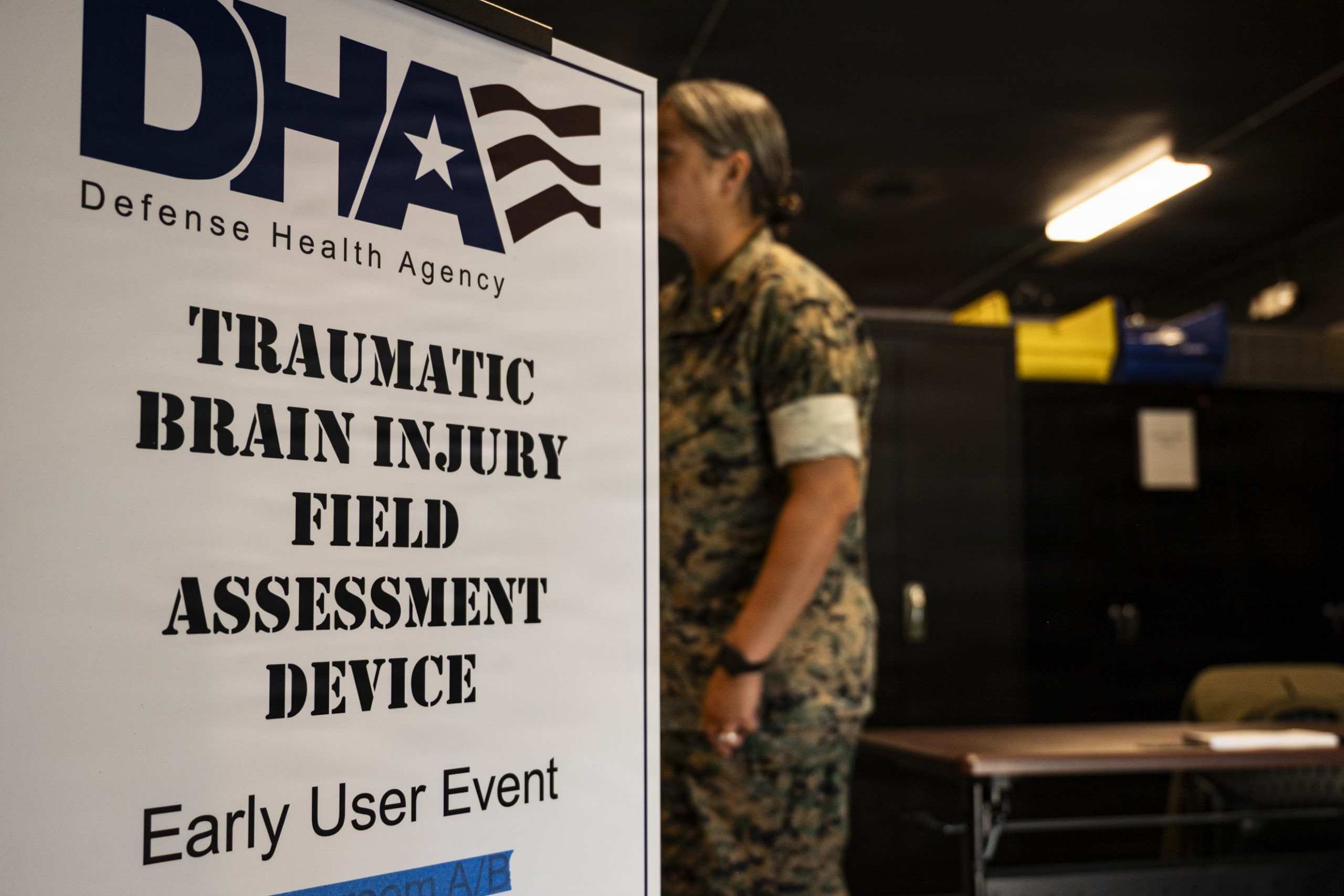
The Defense Health Agency’s Warfighter Readiness, Performance and Brain Health team hosted a medical training camp recently to evaluate TBI assessment technology prototypes being developed for use, according to a mid-July release.
Last week, the Army announced that a handheld blood-testing device, called i-STAT Alinity — which can detect TBI in 15 minutes — is being fielded to units under the 10th Army Air and Missile Defense Command because of the disproportionately high rates of TBIs in air defense.
The move to update the Defense Department’s cognitive monitoring program comes as funding for medical research into TBI has dropped significantly in the last three fiscal years.
In fiscal 2024, TBI under the Congressionally Directed Medical Research Programs was allocated $175 million, which dropped completely the following fiscal year to zero.
Funding jumped to $40.5 million in fiscal 2026, still a 23% decrease from fiscal 2024, with fiscal 2027’s budget request maintaining that amount.
Cristina Stassis is a reporter covering stories surrounding the defense industry, national security, military/veteran affairs and more. She previously worked as an editorial fellow for Defense News in 2024 where she assisted the newsroom in breaking news across Sightline Media Group.
Read the full article here