


Pentagon leaders increasingly argue that future wars will be won by the force that can sense, decide and act faster than its enemy.
Lessons from Ukraine and growing concerns about potential conflict with China have intensified the Defense Department’s focus on what officials call “information and decision advantage” — the ability to make informed decisions quicker and more accurately than an adversary.
Through its Combined Joint All-Domain Command and Control initiative, known as CJADC2, the Pentagon is dedicating billions of dollars in artificial intelligence, advanced battlefield networks, data integration and autonomous systems designed to accelerate commanders’ decision cycles.
Defense Secretary Pete Hegseth has said the department’s goal is to “put the best systems in the hands of warfighters” so leaders have “the systems that support what you need for maximum lethality.”
Still, future battles are expected to be rife with degraded communications, disrupted networks and information overload. The war in Ukraine highlights those challenges.
Military analysts studying the conflict have documented instances in which Ukrainian units have been forced to adapt after Russia‘s electronic warfare disrupted communications and drones altered battlefield visibility. Rapidly changing conditions pushed small-unit leaders to make consequential decisions with incomplete information and limited guidance. In those moments, information was plentiful, but certainty was elusive.
As the U.S. military modernizes for large-scale combat against technologically sophisticated adversaries, experts are asking one fundamental question: Is the Pentagon investing as heavily in honing human instincts as it is in developing the technologies to support them?
No ‘perfect’ information
Retired Army officer John Spencer, executive director of the nonprofit Urban Warfare Institute, believes the U.S. military has significant advantages to address the challenge.
“I travel the world and observe militaries all around the world, and there is nothing like the American soldier and the American system,” Spencer said.
However, Spencer said, none of the U.S. military’s technological advances changes a basic truth: “When you strip away everything, it comes down to those base characters of selfless service, duty, honor to the country,” he said. “If you don’t have the character, you don’t have anything.”
Recent wars in Ukraine and elsewhere have reinforced another enduring lesson, Spencer said. Battlefield effectiveness depends on the unit of the teams making decisions, not simply the speed of at which those decisions are made.
Cohesion, Spencer said is the most important factor and “the glue that holds it all together.” Speed alone is not enough.
As the Pentagon pursues increasingly sophisticated tools to improve battlefield awareness, he cautioned against assuming leaders will ever possess perfect information.
“The all-seeing eye is a myth,” he said.
A screen can never give the whole battlefield picture, said Jon Macaskill, a retired Navy SEAL commander who saw two decades of war.
“The picture from above is never the whole picture,” Macaskill said, adding “the guy on the ground who actually understands the terrain and the people on it is worth more than any feed.”
Macaskill cautioned that as the post-9/11 generation retires from the military, it risks losing experience that cannot be fully captured in doctrine, after-action reports or lessons-learned databases.
That instinct includes understanding “how fast a situation can come apart, how communications degrade under stress, how the picture you think you have and the real picture can drift apart in minutes,” Macaskill said. “When the people with that kind of knowledge and experience hang it up and walk away, that judgment leaves with them.”
Learning under pressure
The question now is whether military institutions can intentionally develop those instincts before the next war demands them.
On that point, Macaskill is not sure.
He and other experts question whether institutional training alone can fully replicate the intuition forged through years of combat experience. Macaskill argues that some of the most important aspects of combat leadership resist codification.
“Doctrine can’t tell you how to keep a 19-year-old calm enough to do his job when the rounds are coming in,” he said. “It can’t tell you how to make a call with half the information you’d want, knowing people will live or die based on whether you got it right. A manual can teach you a procedure but it can’t teach you humility.”
For decades, military educators have attempted to build strong judgement through demanding training designed to stress leaders long before they encounter combat, a method with which Spencer agrees.
The Army veteran argues that sound decision-making cannot be meaningfully developed without placing leaders under pressure.
“If you want to test character and judgment, you have to put people under stress,” Spencer said. “The worst thing you ever want to hear is somebody to say, ‘This is the first time I’ve had to do this.’”
Stresses of future wars
Defense leaders and military strategists expect future conflicts against peer adversaries to involve long operations and sustained cognitive demands on leaders at every level.
Bailey Weis, a former Marine who completed Infantry Training Battalion and later participated in Marine Special Operations Command assessment, said demanding military environments reveal that effective decision-making depends less on motivation than on stability.
“Can you perform when you are uncomfortable for long periods, when no one is adjusting anything for you, and when feedback is minimal?” she asked.
Weis said one of the biggest misconceptions about high-performance military environments is that aptitude is revealed during a single event.
“It is cumulative fatigue, load carriage, sleep deprivation, and repetition. That is where separation really happens,” she said.
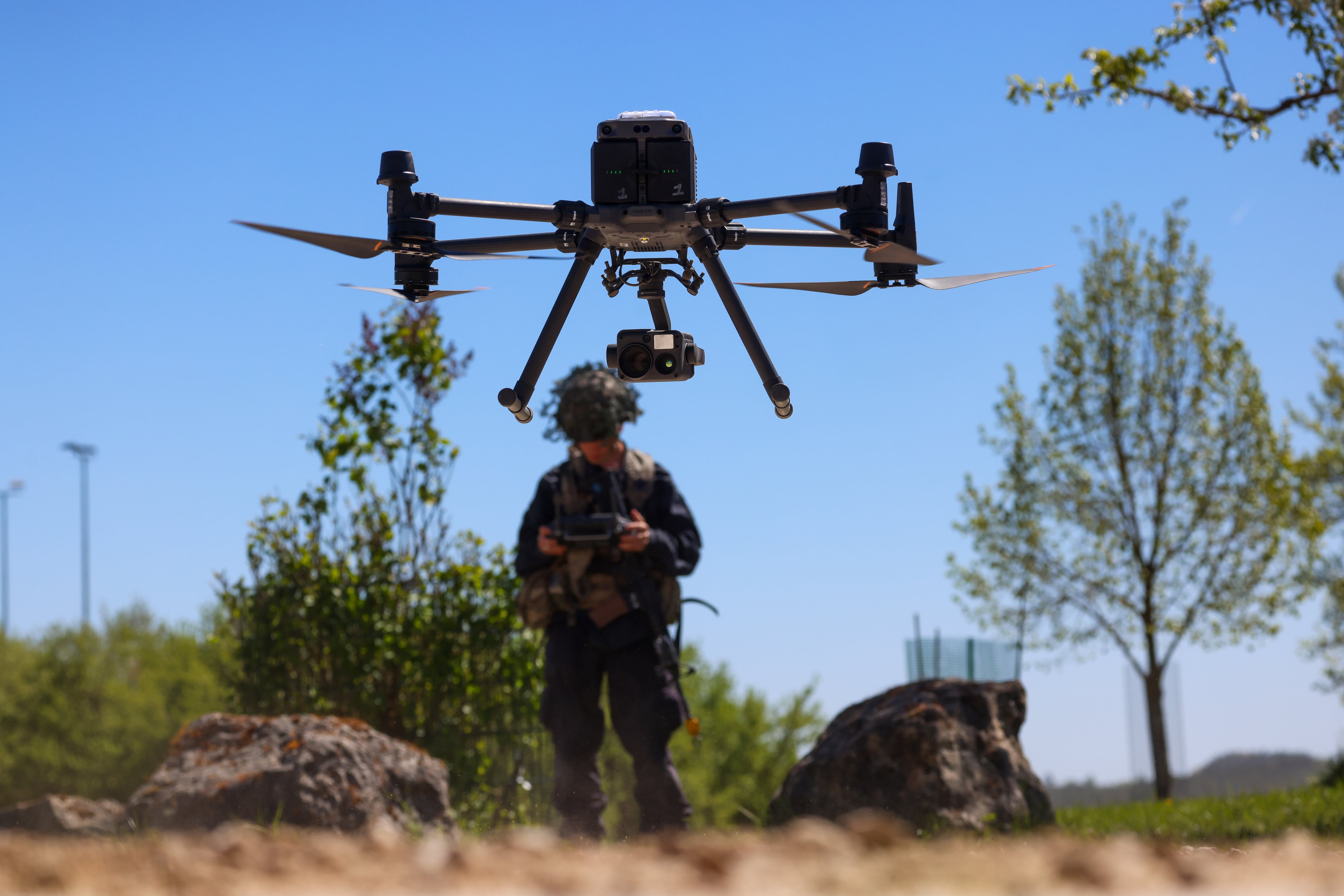
Drones, artificial intelligence and advanced battlefield networks may transform the mechanics of war, but according to Spencer, Macaskill and Weis, future battlefields will still demand leaders capable of making sound decisions when communications fail, plans unravel and information is incomplete.
“You either meet the standard under load, under fatigue, over time, or you do not,” she said.
As the post-9/11 generation leaves the force, the military’s challenge will likely not be teaching leaders how to use new technologies, but rather ensuring they develop the instincts, character and judgment future wars will still require.
Despite rapid advances in technology, Spencer said one military advantage has endured across centuries of warfare: cohesive teams.
“History shows that small-group togetherness is our strength,” he said. “We still need groups of men and women who are cohesive and care about each other, and that’s not a given on the modern battlefield.”
Read the full article here