

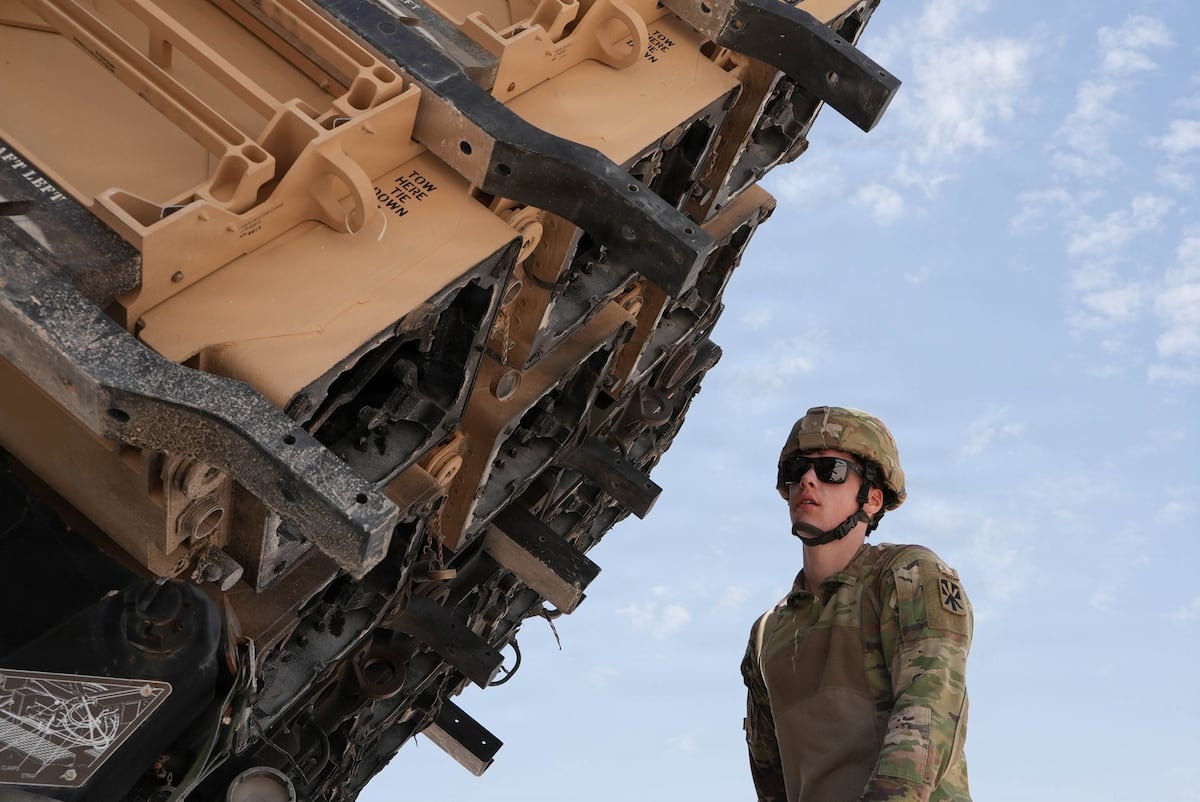
The United States has depleted roughly two-thirds of its pre-war Patriot missile interceptor inventory during the conflict with Iran, according to a new analysis by the Center for Strategic and International Studies — a drawdown the think tank says could create readiness challenges if another major conflict erupts before stockpiles are rebuilt.
Using publicly available information on missile expenditures, production rates and estimated U.S. inventories, the Washington-based think tank estimates the U.S. has expended about 65% of its Patriot inventory, leaving fewer than 1,000 interceptors remaining. The analysis also estimates U.S. inventories of Terminal High Altitude Area Defense, or THAAD, interceptors have declined by about 38%, leaving an estimated 234 to 278 interceptors.
CSIS concluded the greater strategic risk is not sustaining the current conflict but responding to another high-intensity contingency before Patriot and THAAD inventories can be rebuilt. According to the analysis, depleted inventories could force the U.S. and its coalition partners to accept greater operational risk during air-defense operations by conserving interceptors or prioritizing only the highest-value threats.
Patriot interceptors are among the U.S. military’s primary defenses against ballistic missiles and are used to protect troops, military installations and allied populations from incoming attacks. During the Iran conflict, Patriot and THAAD systems helped defend U.S. forces and partner nations against ballistic missile attacks, although some missiles penetrated air defenses and caused casualties and damage.
RELATED
In the assessment, CSIS analysts Mark Cancian and Chris Park wrote that U.S. forces expended large quantities of air-defense interceptors during the initial phase of Operation Epic Fury, leaving significantly fewer missiles available as operations resumed.
“There are no good alternatives to Patriot and THAAD for ballistic missile defense,” the duo concluded in their report.
Their findings further detail that rebuilding depleted interceptor inventories will take multiple years, raising readiness concerns for other theaters.
The Pentagon has not publicly confirmed the inventory estimates contained in the CSIS analysis and did not immediately respond to a request for comment.
The Army this week awarded Lockheed Martin a contract worth up to $58.6 billion to produce Patriot Advanced Capability-3 Missile Segment Enhancement, or PAC-3 MSE, interceptors through fiscal 2032. The multiyear agreement is intended to expand production capacity as demand for the air-defense missile continues to grow.
“It takes several years to produce a missile. If you put money into the system today, you wouldn’t get a missile for three or four years. Sometimes even five,” Cancian told the BBC. “What we’re getting now are missiles that were funded in 2023.”
That production timeline, CSIS said, leaves a near- to medium-term window of risk if the U.S. is forced to respond to another major conflict before interceptor stockpiles are restored.
Read the full article here