
The U.S. Army is looking for drones that can transport blood supplies in the field, according to a new sources sought notice from the service.
The Army aims to select a contractor that can deliver two prototype UAVs for what it is calling the Army Blood Link project, the notice states. Each drone must be capable of transporting 20 units of blood products.
The deadline to respond to the notice is Sept. 21, and the drones will need to be delivered within three months of the contract award.
“Due to the compressed timeline, we recommend focusing on further development and adaptation of existing commercial off-the-shelf (COTS) UAS solutions,” the notice emphasized.
The request for proposals, issued on behalf of the XVIII Airborne Corps Joint Operations Innovation Outpost, calls for a UAV that can haul a minimum of 35 pounds and up to 50 pounds. The drone should have a one-way transport radius of 30 kilometers and a maximum range of 100 kilometers, the notice states.
Maximum speed was not specified in the request, but the Army wants a UAV capable of flying at an altitude of up to 18,000 feet. The request notes that the UAV should also be capable of a “maximum 30-minute response time from mission request to launch under standard operating conditions.”
Given the perishability of blood supplies, the drone must carefully regulate its operating temperature, the Army requested. The cargo container should “maintain required temperature for up to [three] hours of transport time, within an ambient environment of 15°F to 120°F with high humidity,” the notice states.
The Army estimates a total mission duration of three to six hours, with blood carried within temperature limits for no more than three hours.
The request also details that the container must accommodate blood bags roughly 8 inches long and 5 inches wide. The cargo bay should also be resistant to vibration, rain, sand, chemical contamination and other environmental hazards.
Upon delivery, the drone will need to precisely land a cargo within 10 meters of the desired location, according to the request.
Potentially dropping of the blood supplies from the air is also possible, the notice states. This would mean a “drop capability from 10 to 15 meters above ground level with landing accuracy sufficient to remain within the 10-meter delivery-location requirement and not damage the blood products or compromise container integrity,” the request notes.
The Army envisions a semi-autonomous drone with “autonomous waypoint navigation and return-to-base functions, under operator supervision.” The service wants the UAV and its ground equipment to also have an operational lifespan of 500 to 1,500 flight hours.
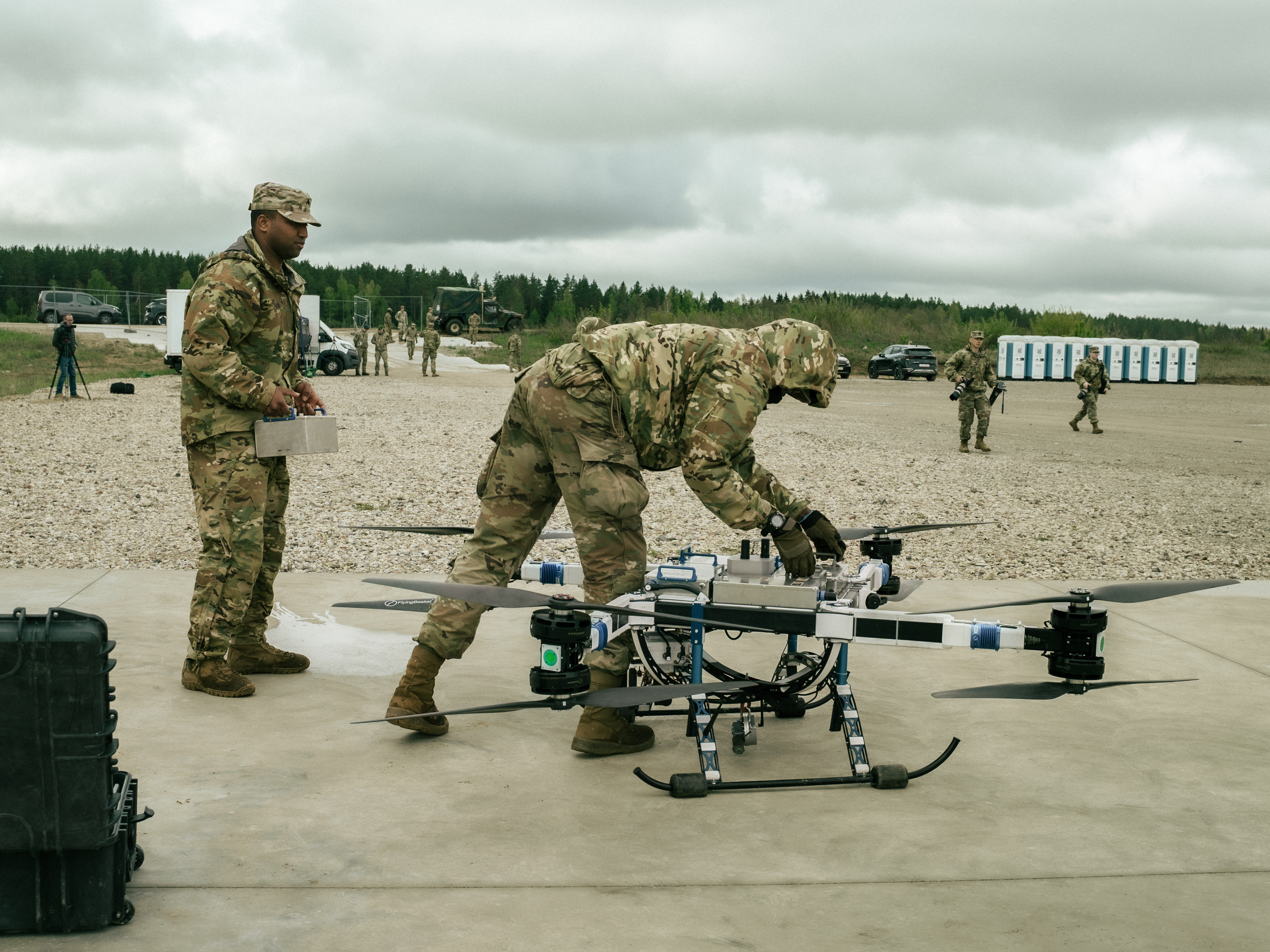
The Army has been devoting more attention to the challenge of delivering blood supplies to the front lines. In May 2025, the 173rd Airborne Brigade used drones to transport blood during the Swift Response exercise in Lithuania.
Michael Peck is a correspondent for Defense News and a columnist for the Center for European Policy Analysis. He holds an M.A. in political science from Rutgers University. Find him at theuncommondefense.com. His email is mikedefense1@gmail.com.
Read the full article here