

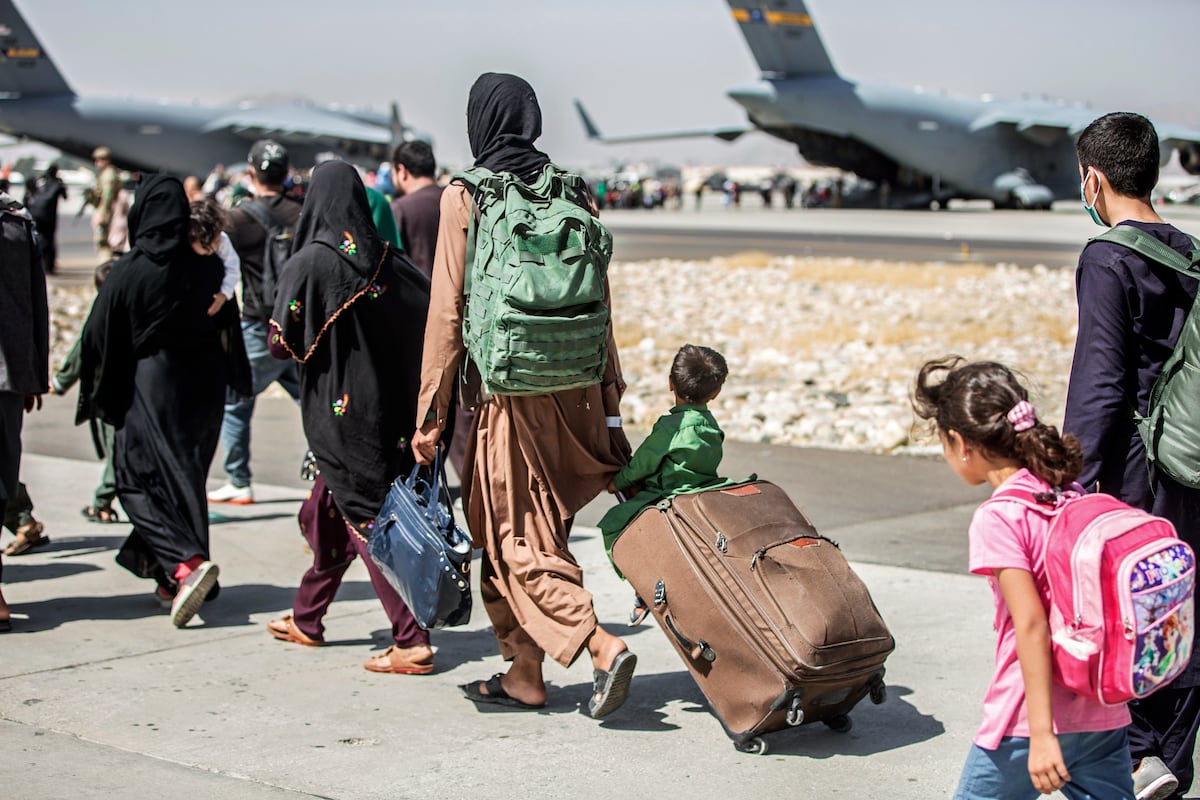
As the fifth anniversary of the U.S. military’s chaotic departure from Afghanistan approaches, tens of thousands of the Afghan allies America promised to protect remain at risk — either still under threat in their home country or facing instability and limbo abroad.
The veteran-led organization AfghanEvac hopes a new AI-powered tool will benefit from the extensive data it’s gathered about the tortuous visa and asylum application process to help new applicants find the most promising pathways to help.
The Visa Pathways and Relocation Information Center, or V-PRIC, launched earlier this month and has seen more than 30,000 visits in its first week live, said Shawn VanDiver, the Navy veteran who founded and leads the organization. While the tool requires users to verify that they understand it won’t provide vetted legal advice, it aims to simplify daunting and confusing options and find the pathway most aligned with their circumstances.
When users select “find my pathway,” they’re prompted to enter information about their current location, their eligibility as an Afghan who worked for the U.S. and whether they’re in danger now. They’re also asked to write a brief statement in their own words describing their story and situation.
Then, the tool uses its database of 124 U.S. visa and status classifications — 16 of them relevant to Afghan applicants — and detailed information on global pathways around the world to link users up with the options that best match their needs and qualifications.
VanDiver is clear: there aren’t many promising pathways available to anyone right now. The Trump administration last year issued an indefinite suspension on processing of Afghans’ request to immigrate to the U.S., and terminated temporary protected status for asylum-seeking Afghans, leaving about 11,000 already in the States unable to work and at risk of deportation.
About 1,100 Afghan allies and their family members are stuck in grim conditions at the Camp As Sayliyah processing facility in Doha, Qatar, unable to leave due to the travel ban even though many had already secured approval to enter the U.S.
This spring, the Trump administration proposed forcing those at the camp to choose between returning to Afghanistan or being relocated to the war-torn and desperately impoverished Democratic Republic of the Congo. Some 400 of those camp residents are children, according to VanDiver.
Despite the barriers, VanDiver believes V-PRIC will help prospective applicants avoid wasting time at closed doors, stay abreast of rapidly changing policy and figure out the most promising options.
“It … tells you where the blocker is,” he said. “If it’s a matter of policy or a matter of law, if it’s a choice that can be unmade, and who can approve exceptions to it.”
The tool has been trained on legal decisions and executive orders and policy statements, but also surveys AfghanEvac has run and plain-language explainers they’ve developed, VanDiver said. Organization staff continue to update it to remove inaccuracies and reflect changing conditions. It might provide context that the U.S. State Department does not.
VanDiver gave the example of an Afghan special immigrant visa applicant who has received a notice from State that they can schedule a visa interview — not noting that the visa approval pipeline remains closed. V-PRIC can flag that, he said.
“It says, ‘Hey, hold up, don’t necessarily schedule your interview yet. They’re all going to be denied, and having that denial on your record can create problems down the line,’” VanDiver said.
For AfghanEvac, the work to secure safety for those who helped the U.S. at war continues indefinitely. A survey of more than 1,100 Afghans run between Jan. 31, 2025 and July 7 found, of the 427 respondents still in Afghanistan, nearly half face a direct threat from the Taliban. Another 427 respondents reported being in Pakistan, awaiting a pathway to safety there. Of that group, 44% said they feared deportation, and 45% reported experiencing a health crisis. Thirty-nine of the respondents were at Camp As Sayliyah, awaiting a pathway out.
“It feels like we’re in jail, punished like criminals — even though we stood with the U.S.,” one respondent who’d spent 282 days at the camp, said in the survey, according to information provided by AfghanEvac.
VanDiver stresses that the V-PRIC tool doesn’t replace legal expertise, but he hopes it will offer a starting point to help people who may be at a loss to understand their first or next steps toward reaching safety.
“Get a lawyer, open a congressional case; here are the warnings about your particular type of case,” he said. “[V-PRIC] can help people understand, based on their specific situation, what their options are.”
Read the full article here